


Why the Head Scoop Matters (Not Just the Clamp)
A neck clamp alone helps, but the head scoop is where the real magic happens.
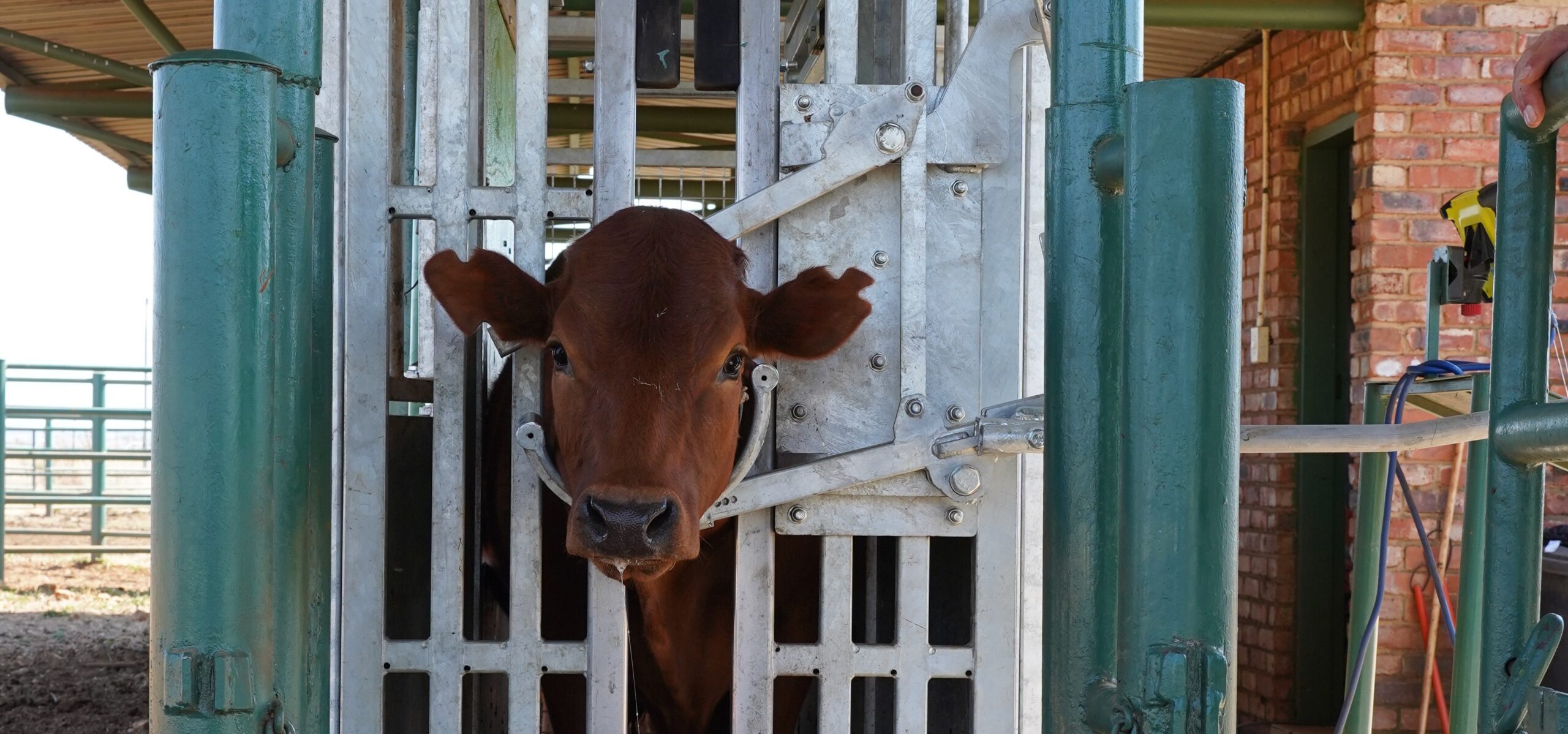
The head scoop:
- Restricts up-and-down head movement
- Keeps the animal’s head aligned and supported
- Prevents the cow from injuring itself
- Reduces strain on the neck and shoulders
- Keeps the operator out of harm’s way
For FMD inspections, this means:
- Easier mouth inspections
- Safer ear tagging or dosing
- Faster visual checks of lesions
- No wrestling matches with 600kg of opinion
Faster Checks. Less Stress. Better Compliance.
During disease outbreaks, time matters. But so does accuracy.
With the H-Clamp + Head Scoop:
- Inspections are quicker per animal
- Animals move through the crush smoothly
- Stress and panic don’t escalate through the herd
- You can work confidently — not defensively
Less stress on the animal also means:
- Less slipping
- Less bruising
- Less weight loss
- Fewer injuries caused by panic movement
Built Into the Crushes You Already Trust
The H-Clamp model is standard on all Livetrack SA squeeze and crush systems:
- Buffel
- Wildebees
- Kudu
Already have a handling crate? The H-Clamp is compatible with separate or existing races, making upgrades simple without ripping out your whole setup.
It can be fitted:
- With or without a head scoop
- With or without a retaining frame
You choose the level of control you need.
Protecting People Is Just as Important as Protecting Cattle
Let’s be blunt:
No inspection is worth a broken arm, smashed knee, or head injury.
The head being held:
- Keeps operators out of striking range
- Prevents sudden head swings
- Allows calm, deliberate handling
- Reduces fatigue and rushed decisions
When disease pressure is high, safety needs to be non-negotiable.
Designed for Real Farmers, Real Conditions
This isn’t over-engineered fluff. The H-Clamp is:
- Tough
- Practical
- Low-maintenance
- Designed to work in dust, mud, and pressure situations
Specifications:
- Height: 2400 mm
- Width: 1470 mm
- Weight: 175 kg
It’s built to handle big cattle, bad days, and high-pressure inspections.
Final Word: Calm Cattle Catch Problems Early
Foot and Mouth Disease requires vigilance, not chaos.
A calm, restrained animal lets you:
- Spot issues sooner
- Check properly the first time
- Protect yourself and your team
- Prevent animals from injuring themselves
The H-Clamp Head Clamp with Head Scoop doesn’t just make handling easier.
It makes it safer, faster, and smarter, exactly what farmers need when pressure is high.
If disease control is part of your reality, your handling system should be part of the solution, not the problem.